Philippines Takes Steps to Eradicate Offshore Gaming Operations
In a decisive move nearly one year after President Ferdinand Marcos Jr. imposed a ban on offshore gaming in the Philippines, both the Senate and House have enacted legislation aimed at permanently diminishing any chances for their return.
On Monday, Philippine senators unanimously passed a bill designed to solidify this ban on offshore gaming, known as Senate Bill 2868 or the Anti-POGO Act. Senator Sherwin Gatchalian, a key sponsor, emphasized that this legislation is more than just a ban; it is a response to public demand to eliminate what many see as a societal nuisance. “This isn’t merely a law—it’s a movement reflecting the will of our people to end the POGO crisis,” Gatchalian stated.
A supportive bill was swiftly approved by the House the following day, receiving a significant 172-1 vote in favor.
The POGO Dilemma: A Short-lived Era of Trouble
The POGO (Philippine Offshore Gaming Operations) phenomenon was marked by its brief yet tumultuous existence. Back in September 2021, the previous administration under President Rodrigo Duterte sought to legitimize these operations through Republic Act 11590, which introduced a tax structure, hoping to generate PHP32 billion ($572 million) annually for state revenues, primarily earmarked for universal healthcare.
However, those projections were wildly optimistic. In reality, POGOs contributed only PHP3.91 billion in 2021, with revenues rising to PHP8.88 billion in 2022—far below the ambitious target. As Gatchalian pointed out, the expected contributions were not materializing as hoped.
Moreover, POGOs became synonymous with rampant crime and corruption. Reports surfaced of severe human rights violations, with numerous foreign workers rescued from POGO facilities revealing distressing tales of coercion into online scams and dire threats. Following these alarming developments, President Marcos Jr. called for a stringent shutdown of the industry.
POGOs: Facing More Than Just Economic Repercussions
Senate Bill 2868 stipulates the seizure of properties and equipment related to POGO operations, alongside continued efforts to deport foreign nationals linked to the sector. Currently, around 9,000 foreign POGO workers remain in the Philippines, despite government orders for their departure.
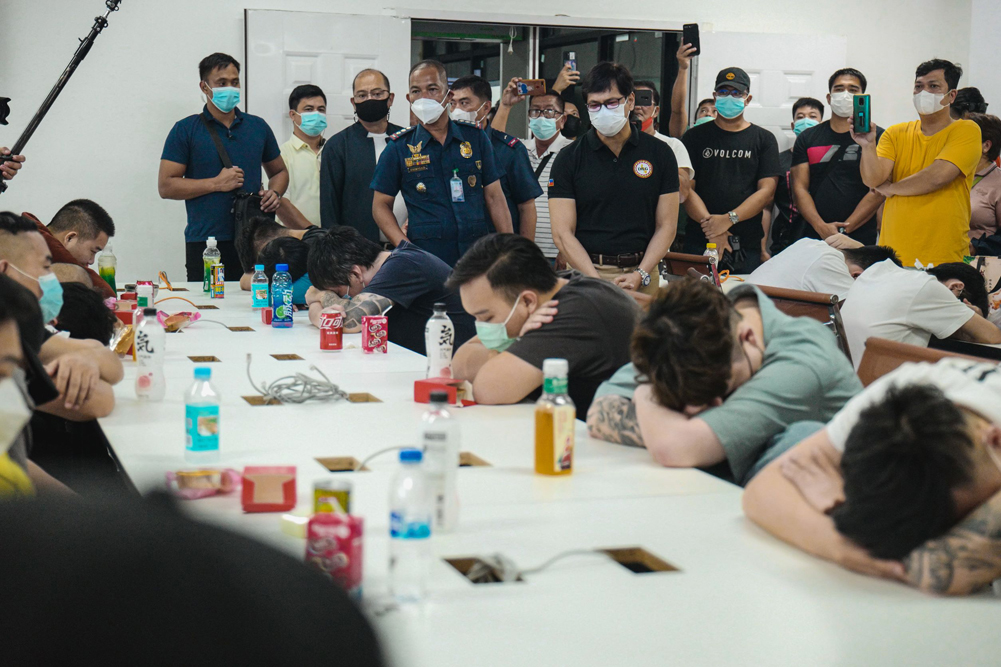
To combat the ongoing issues, authorities have launched raids, apprehending 750 foreign nationals linked to POGO-related misconduct since January. However, logistics pose a challenge: Gilbert Cruz from the Presidential Anti-Organised Crime Commission (PAOCC) noted the urgency for a centralized database to streamline intelligence sharing. This would aid law enforcement in better tracking illegal activities while potentially utilizing local government resources for more effective oversight.
“This initiative transcends merely shutting down businesses; it’s critical for safeguarding the country’s reputation, ensuring public safety, and affirming that the Philippines cannot become a refuge for criminal enterprises,” Cruz asserted.
With this legislation, which seeks to repeal the earlier Republic Act 11590, the final hurdle lies ahead: awaiting President Marcos’ signature to finalize the ban. The future of the Philippines’ gaming landscape remains uncertain, but for many, it’s a hopeful shift towards a safer and more accountable environment.