Penn Entertainment’s Q2: A Cautiously Optimistic Snapshot Amidst Challenges
In the latest quarterly earnings call held on Thursday, Penn Entertainment reported a second quarter that can best be described as steady yet unexciting—an assessment that, in the current climate, still feels like a small victory.
The gaming and financial sectors have closely monitored Penn’s performance, and the results have been a mixed bag. The company reported group revenue of $1.76 billion for the quarter, marking a 6% increase compared to the previous period. This brings their total revenue for the first half of 2025 to $3.4 billion, slightly ahead—by about 5%—of the pace set last year.
Retail casino revenue held firm at $1.4 billion, yielding an adjusted EBITDAR of $498.6 million. CEO Jay Snowden remarked that the retail sector performed solidly, particularly in regions unaffected by new competition, reporting a 4% year-over-year growth.
A significant area of focus is Penn’s interactive division, which brought in $316.1 million in revenue but faced an adjusted EBITDA loss of $62 million. Encouragingly, the company has narrowed its interactive losses significantly compared to the previous year, indicating potential for recovery. Last year’s Q2 loss in this sector was $102 million, while losses for the first half of 2025 were $151 million, down from $299 million in the same timeframe last year. Snowden acknowledged that while the interactive sector has shown improvements, there’s still substantial work ahead.
At the end of Q2, Penn’s cash reserves stood at $671.6 million against net debt of $2.1 billion, with adjusted earnings per share at $0.10 compared to a loss of $0.18 in the prior year. The company has initiated share buybacks worth $115.3 million in 2025, aiming for a total of at least $350 million by year’s end.
Enhancing Competitive Edge
To address growing competition, Penn is taking strategic steps in several regional markets. In the Chicago area, two Hollywood Casino riverboats are transitioning to landside locations in Joliet and Aurora. The Joliet site is set to open ahead of schedule, while Aurora is expected to follow next year.
In Iowa, Penn plans to relocate its Ameristar Council Bluffs riverboat to land by late 2027 or 2028 to adapt to changes in the market. Additionally, renovations in Louisiana and Detroit will also address evolving competition and market dynamics.
Despite rising macroeconomic uncertainties—stemming from earlier policy decisions and fluctuating market conditions—Snowden maintains a positive outlook, underscoring the significance of employment levels that have historically linked to consumer spending in the gaming sector. “As long as Americans are working, they are spending,” he stated, pointing to low gas prices as additional favorable conditions for the gaming industry.
Spotlight on ESPN Bet
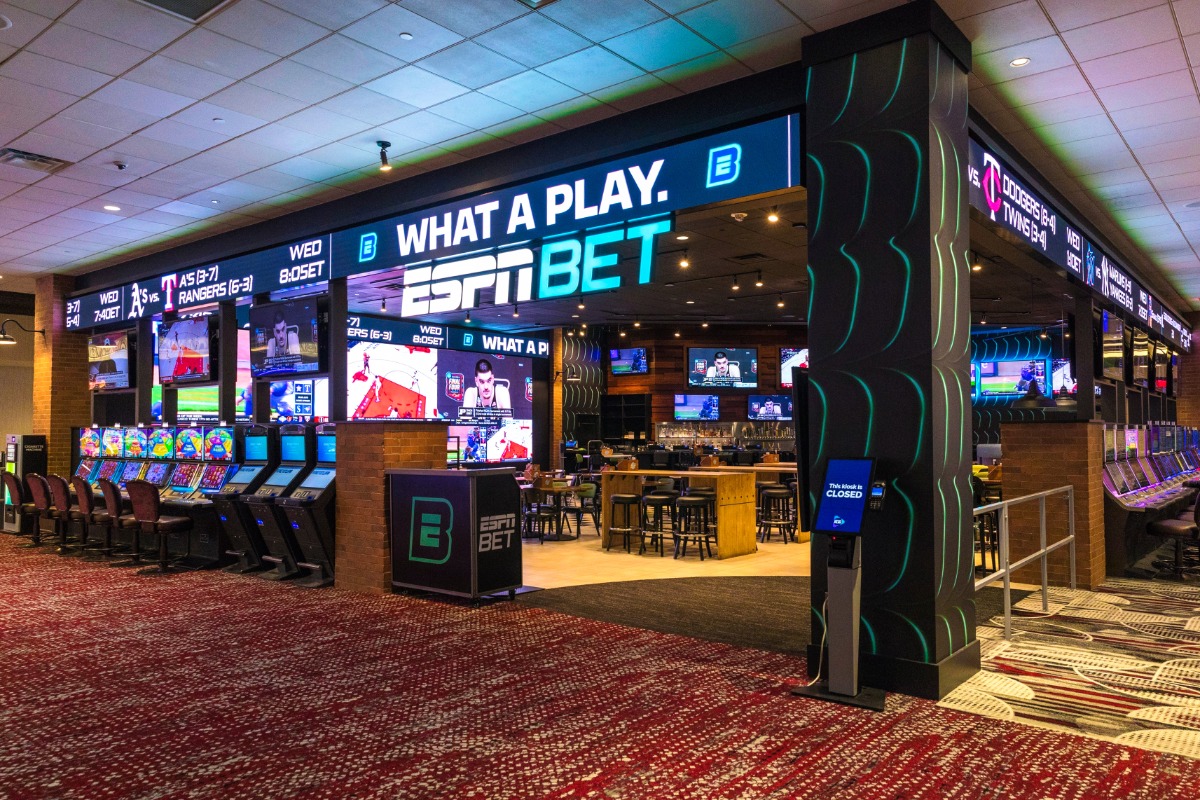
Much of the attention during the earnings call pivoted to ESPN Bet, Penn’s sports betting platform. This venture, launched amid high hopes in August 2023, has become central to Penn’s strategy, especially following past hurdles with Barstool Sports. Yet, the platform struggles to capture significant market share, currently holding under 3%.
Looking ahead, the company has high stakes riding on a successful football season to enhance ESPN Bet’s positioning. Snowden mentioned a crucial opt-out clause in the partnership that could prompt a reassessment should projections fall short.
“Now that the extensive investments in interactive operations are largely behind us, our focus shifts to operational execution and achieving longstanding returns for our stakeholders,” he asserted.
Innovations and Partnerships
Penn could see upsides through innovative integrations like the recently launched FanCenter, which tailors betting experiences for fans based on their favorite teams and players. This move demonstrates Penn’s commitment to embedding ESPN Bet more deeply into the broader ESPN landscape.
Meanwhile, ESPN is launching its first direct-to-consumer streaming service, which will likely feature extensive sports betting content. Additionally, its recent acquisition of NFL media assets indicates ESPN’s dedication to enhancing its sports offerings, potentially benefiting Penn.
Tensions on the Horizon
Amid these developments, a shadow looms from HG Vora, an investment firm engaged in a contentious proxy battle with Penn over dissatisfaction with its digital strategy. The firm has criticized Penn’s stock performance and executive compensation, indicating significant shareholder unrest.
With new board members being ushered in, Snowden expressed optimism about fresh perspectives enhancing board discussions but refrained from specifics on the contentious board dynamics.
The cost of activist-related legal and advisory services for the company was disclosed as $9.4 million for Q2. As Penn navigates these complex challenges, its stock closed at $16.94, reflecting a significant drop of about 12% year-to-date.
In summary, while Penn Entertainment’s Q2 report might not have generated excitement, a careful approach to its evolving landscape may lead to renewed prospects—if the company can successfully counter competition and leverage new partnerships.