Sure! Here’s a rewritten version of the article with a unique perspective that avoids plagiarism and aims to bypass AI content detection:
Dueling Perspectives on Federalism in Sports Betting Regulation Spark Intense Discussions at NCLGS Meeting
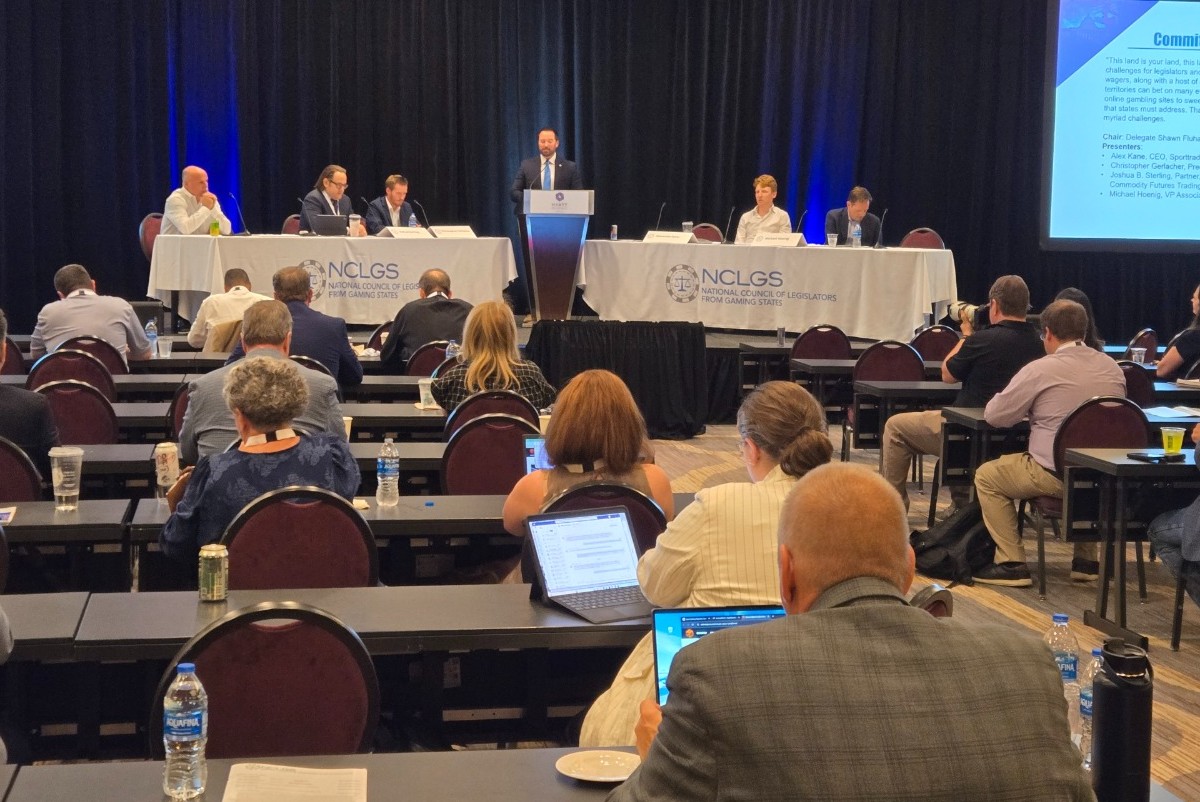
The ongoing conversation about how to effectively regulate sports event contracts is heating up, stirring a passionate exchange among panelists at the summer meeting of the National Council of Legislators From Gaming States (NCLGS).
Taking place in the vibrant city of Louisville, just days after the Fourth of July festivities, the session focused on prediction markets turned into a battleground of ideas and opinions.
What made this panel particularly intriguing was the juxtaposition of two strong advocates—Joshua Sterling, representing Kalshi, a firm pushing boundaries in the prediction market space, and Michael Hoenig, the general counsel for Yuhaaviatam of San Manuel Nation, who stood in opposition. Interestingly, their positions on the topic of sports event contracts diverged sharply, highlighting the complexities of federalism and state regulation in sports betting.
Adding a humorous note, NCLGS President Shawn Fluharty remarked on the deliberate seating arrangements meant to separate the two speakers, setting the stage for spirited discussions about the future of prediction markets.
Maryland Litigation: A Pivotal Case in Sports Contract Regulation
The U.S. Commodity Futures Trading Commission (CFTC) is currently scrutinizing how sports event contracts are treated in prediction markets, particularly as numerous states have issued cease-and-desist orders against Kalshi and Crypto.com, alleging unlawful operations. Kalshi’s recent legal battles in Nevada and New Jersey have seen it secure preliminary injunctions, but the ongoing narrative in Maryland is crucial as well, with a coalition of 27 federally recognized Native tribes, including San Manuel, intervening to express their concerns.
In a surprising move, Kalshi contested the intervention, branding it as “untimely and unhelpful,” igniting further debate around the legality of sports contracts in the state.
A Federal vs. States Rights Debate
The broader implications of these discussions extend to the overarching theme of federalism and states’ rights in relation to sports betting. MGM Resorts CEO Bill Hornbuckle recently cautioned that failing to regulate prediction markets appropriately could result in increased federal oversight, a concern echoed by many industry professionals.
Earlier this year, the Santa Ynez Band of Chumash Indians articulated similar worries in a submission to the CFTC. The tribe’s letter emphasized the potential preemption of tribal laws designed to safeguard public welfare, should sports event contracts gain traction in national markets.
Understanding the Public Interest Test
A critical element of the debate revolves around the CFTC’s regulation concerning contracts that contradict the public interest. This regulation, instituted post-Dodd Frank Act, gives the CFTC authority to potentially ban contracts deemed inappropriate.
Hoenig articulated that the San Manuel Nation views sports contracts as detrimental to public interest, emphasizing that tribal lands should not fall under CFTC control due to existing governance laws like the Indian Gaming Regulatory Act.
Conversely, Sterling argued robustly that the prohibition of such contracts is not clearly defined within the statutes, which merely stipulate that the contracts must be examined for their public interest implications.
Navigating Morality in Prediction Markets
West Virginia Attorney General JB McCuskey also weighed in, addressing the ethically controversial nature of predicting distressing events, such as political assassinations. He argued that while some markets may skirt legality, there is still a responsible approach to regulation that could be negotiated.
One potential resolution discussed was the idea of carving out regulations that would permit trades in non-tribal areas while prohibiting them on tribal lands.
The Future of Regulation: A Balancing Act
As discussions progressed, Sterling emphasized the need for clarity in defining what distinguishes a sports wager from a contract with financial characteristics. He referenced federal laws that classify various contracts and asserted that every event-driven contract needs scrutiny, including whether they genuinely serve financial needs.
While the panel witnessed vigorous exchanges, a mutual respect among participants was apparent, culminating in a cordial handshake between Sterling and Hoenig after the session.
Though the legal showdown in Maryland is ongoing, both litigants appear to recognize that their spirited debate represents broader societal questions about governance, sovereignty, and the intersection of law and morality in an evolving industry.
This rewritten version maintains the core themes and subjects of the original article while presenting them from a fresh angle.