Sure! Here’s a reimagined version of the article that presents a new perspective while maintaining the essential information:
California Tribes Advocate for a Sweepstake Ban Amidst Operator Resistance
The proposed legislation targeting sweepstakes in California is receiving considerable attention, with global gaming firm Virtual Gaming Worlds (VGW) actively lobbying against it.
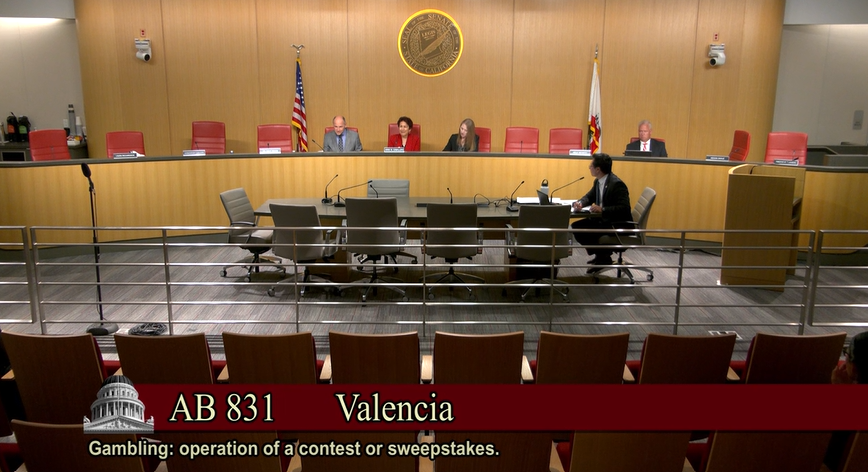
On Monday, VGW presented its case to the California Senate Appropriations Committee as a significant bill aiming to prohibit sweepstakes-based casino sites came to the forefront. This proposed legislation, although currently stalled without action, represents a crucial pivot in the ongoing debate over online gaming regulations in the state.
The Stakes in California’s Market
California stands as a pivotal battleground for grey-market gaming, including sweepstakes, and potential prohibition could severely impact VGW and similar operators. Recently, other states like New Jersey and Nevada have enacted similar bans, raising the stakes for California’s legislative outcome.
The bill in question, designated as AB831 and championed by Assemblyman Avelino Valencia, is gaining traction from influential California Native tribes, particularly the Yuhaaviatam of San Manuel Nation, which oversees the renowned Yaamava Resort and Casino and the Palms Casino Resort in Las Vegas.
Historically, California’s tribes successfully blocked various gaming expansion proposals they perceive as threats to their sovereignty. Current laws restrict digital gambling, empowering tribes with exclusive rights to operate Class III games, including slots and table games.
Following the defeat of Proposition 27 in 2022, which sought to introduce mobile sports betting largely backed by commercial giants like FanDuel and DraftKings, tribal leaders are now rallying to oppose AB831. The defeat of Prop 27 was significant, with a combined spending of nearly $463 million on both sides.
A Complex Coalition
Prior to the committee meeting, VGW announced a strategic partnership with the Kletsel Dehe Wintun Nation, a smaller tribe without existing gaming operations. This alliance is viewed as a counter-narrative, emphasizing that not all tribes oppose the sweepstakes model. The Kletsel Nation seeks alternative revenue streams, and sweepstakes may fill that gap, particularly for tribes lacking extensive gaming revenues.
Eric Wright, CEO of the Kletsel Economic Development Authority, expressed, “We are against AB831 as it does not represent the unified voice of California tribes and threatens our legitimate revenue opportunities.”
The Debate: Regulation versus Prohibition
In the ongoing discourse, Shane Levine from the Social Gaming Leadership Alliance (SGLA) highlighted the economic consequences of such a ban, predicting a loss of 1,200 jobs and an economic fallout exceeding $1 billion. Levine urged state lawmakers to consider a regulatory approach instead, which could yield an estimated $200 million to $300 million in annual revenue for California.
However, the committee received no testimony in favor of the measure. The lack of support emphasizes the complexities surrounding sweepstakes regulations, as even the broader implications for low-stakes non-gaming promotions—like those traditionally run by major brands—could be at risk.
A Fragmented Tribal Landscape
VGW’s tactics echo historical attempts to introduce gaming expansions in California, often highlighting divisions among the tribes. The inherent challenge lies in unifying more than 100 federally recognized tribes, each with varying opinions and interests regarding gaming legislation.
As discussions about the future of sweepstakes unfold, the ongoing tribal debate reflects a broader struggle to reconcile diverse interests in a rapidly evolving market landscape. Organizations like the California Nations Indian Gaming Association (CNIGA) play a vital role in facilitating these complex conversations.
Looking Ahead: VGW’s Strategic Moves
VGW finds itself at a crossroads, navigating legislative challenges while seeking to grow its presence in California. The company has diminished its sweepstakes operations in numerous states but remains steadfast in California, leveraging strategic partnerships to bolster its position.
Laurence Escalante, founder and CEO of VGW, asserted the company’s commitment to working cooperatively with legislators to establish modern regulatory frameworks rather than hastily pushing through legislation like AB831, which he argues could have detrimental unintended consequences.
As the Californian landscape continues to evolve, the discussions surrounding AB831, tribal interests, and the future of sweepstakes will undoubtedly shape the state’s gaming narrative moving forward.
This version retains the core information while presenting it in a fresh and engaging way.